
Sacred Spaces of the Ancient Mediterranean
Temple to Artemis at Brauron
Dexter Greer
Overview
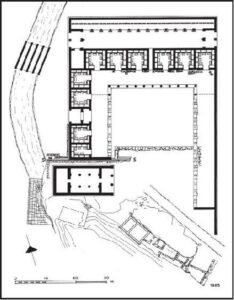
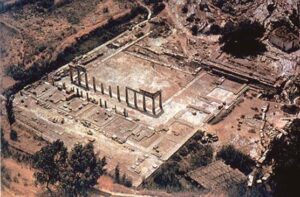
Brauron is the location of an ancient temple to Artemis located just outside of Athens. Excavation began in 1948 by John Papadimitriou and he continued his excavation until dying in 1963. The temple was a significant place of worship for Athenians and was the location for the Artekia. Built between the 6th and 5th centuries BCE, the religious site was in use until around 300 BCE when the site was abandoned. While not much of the structure is left various the archaeological and literary evidence we have reveals a lot about the ritual practices and design for the cult.

Artemis
Artemis was the ancient Greek goddess of maidenhood and wild animals. Her temples were often located in rural areas or at the edges of cities, like Brauron. Deer and bears were here sacred animals, along with other game animals that were typically sacrificed to her.
Iphigenia
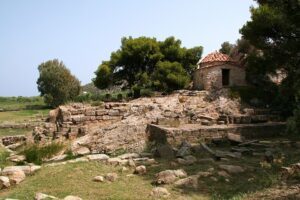
Euripides, in his story Iphigenia in Tauris, wrote about Iphigenia being ordained by Athena to be the founder of a cult to Artemis at Brauron. Papadimitriou during his excavation used Euripides as a source of information about the site and attributes the site as the burial grounds for Iphigenia. More recent analysis by Gunnel Ekroth concludes that there is a lack of archaeological evidence to support this idea, and his writing is not a reliable source on the worship of Artemis at Brauron. Particularly there is no evidence that Iphigenia was buried here, and the location Papadimitriou marks as her burial site is instead possibly a ritual dining hall.
Archaeological Remains
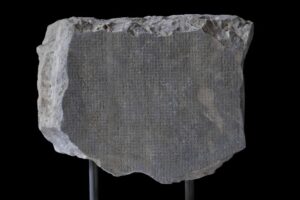
The excavation found numerous surviving objects at the temple, such as vases, statues, and a written inventory. These are evidence for the Artekia with a statue of a bear and vases depicting the ritual in progress. The inventory suggests that the cult received many dedications of clothing, which were given by mothers after childbirth to Artemis. It is suggested by Euripides that they would also be gifted in the names of mothers that died in childbirth, but there is no other source to back that claim.

Artekia
The Artekia was a festival to Artemis preformed every five years. The story behind it is that an Athenian girl was attacked and blinded by a bear, and her brother killed the bear in retaliation. Artemis was offended by this, the bear being one of her sacred animals, and to appease her the ritual was instituted. The festival involved a procession from the city of Athens to the temple at Brauron with young girls called the Arktoi acting as bears, followed by animal sacrifice to Artemis. The words Artekia and Arktoi are derived from the ancient Greek word for bear, and in some versions of the story of Iphigenia in Aulis when she is being sacrificed she is saved by Artemis and replaced by a bear rather than a deer. The Brauronian cult seemed to be more inclined towards Artemis’ aspect of wild animals and maidenhood, combining the two in this festival with young girls imitating an animal.
Bibliography
Acropolis Museum. (n.d.). Explore the collections. Acropolis Museum. https://www.theacropolismuseum.gr/en/explore-collections?field_exhibit_collection_value=First%2BFloor_North_Artemis