
Sacred Spaces of the Ancient Mediterranean
The House of the Vestals
Nina Fioravanti
Virginity Rocks! a.k.a., What’s Left of the House of the Vestals
The House of the Vestals, or Atrium Vestae, is located at the heart of the Roman Forum, nestled between the Temple of Vesta and the Regia, and just southeast of the Palatine Hill. It was the residence of the Vestal Virgins, the priestesses dedicated to the cult of Vesta, the goddess of the hearth. The site, integral to Roman religious and civic life, housed these priestesses who maintained the sacred fire of Vesta, and reflected the status and sanctity of its inhabitants. The origins of the complex date back to the Regal period of Rome, but it saw extensive modifications, particularly in the Imperial period under emperors like Augustus and Trajan. The House of the Vestals was a grand structure, reflecting the elevated status of its inhabitants, who were among the most revered figures in Roman society.

What’s There?

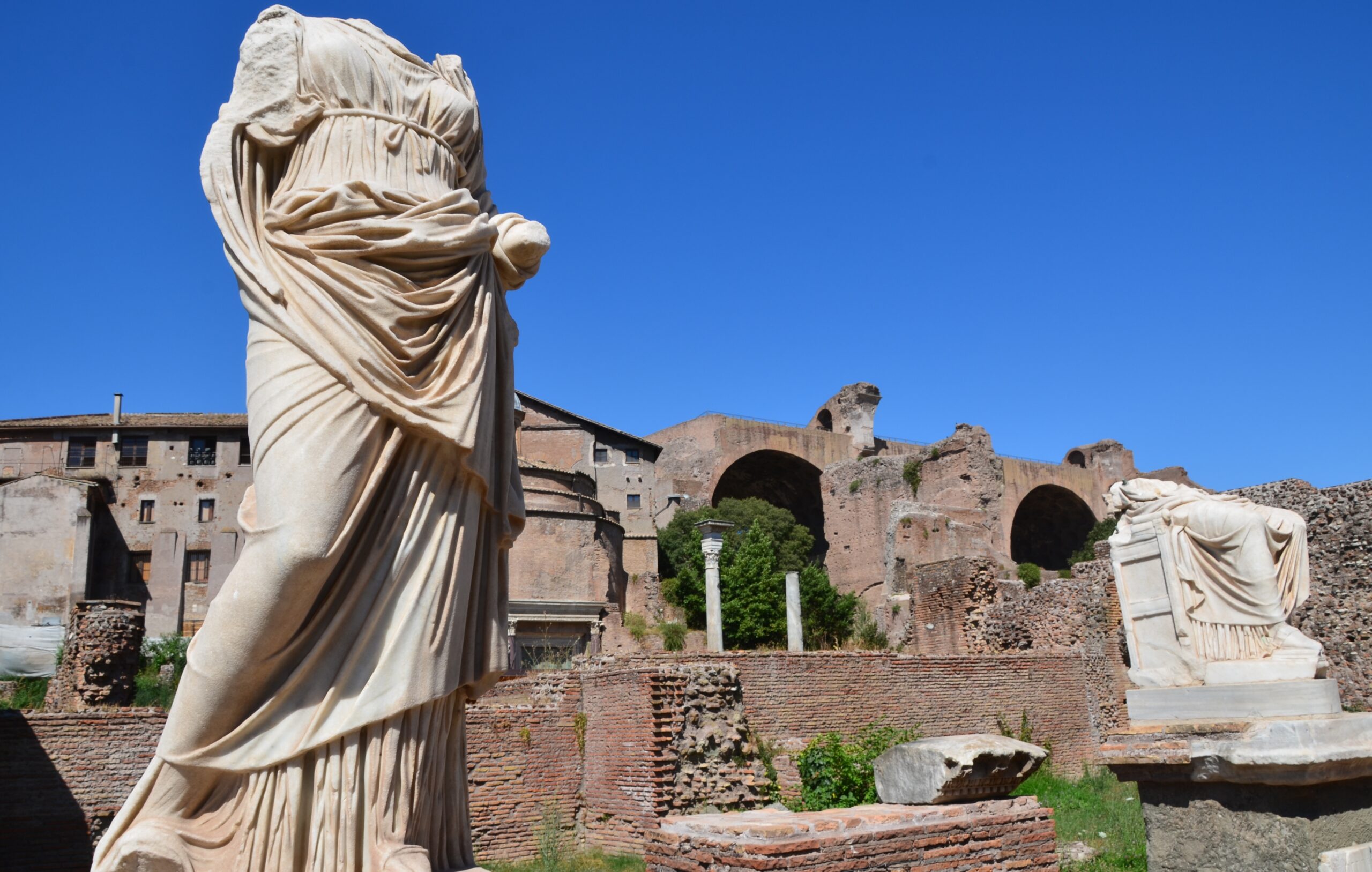
The House of the Vestals consists of several key structures arranged around a large peristyle courtyard. The residence itself was a large, multi-storied complex with a central courtyard, surrounded by colonnaded walkways and numerous rooms that served as living quarters, ceremonial spaces, and storage areas.1 Excavations have revealed a series of interconnected rooms with mosaic floors, marble decorations, and statues of past Vestal Virgins. Inscriptions on the statue bases commemorate the achievements and virtues of these women, effectively creating a hall of honor within the residence.2 The site also includes a sacred precinct that housed the Temple of Vesta, where the eternal flame was kept burning. Maps and archaeological diagrams illustrate the site’s evolution, showing layers of construction and subsequent rebuilding efforts, particularly following fires and other disasters.1
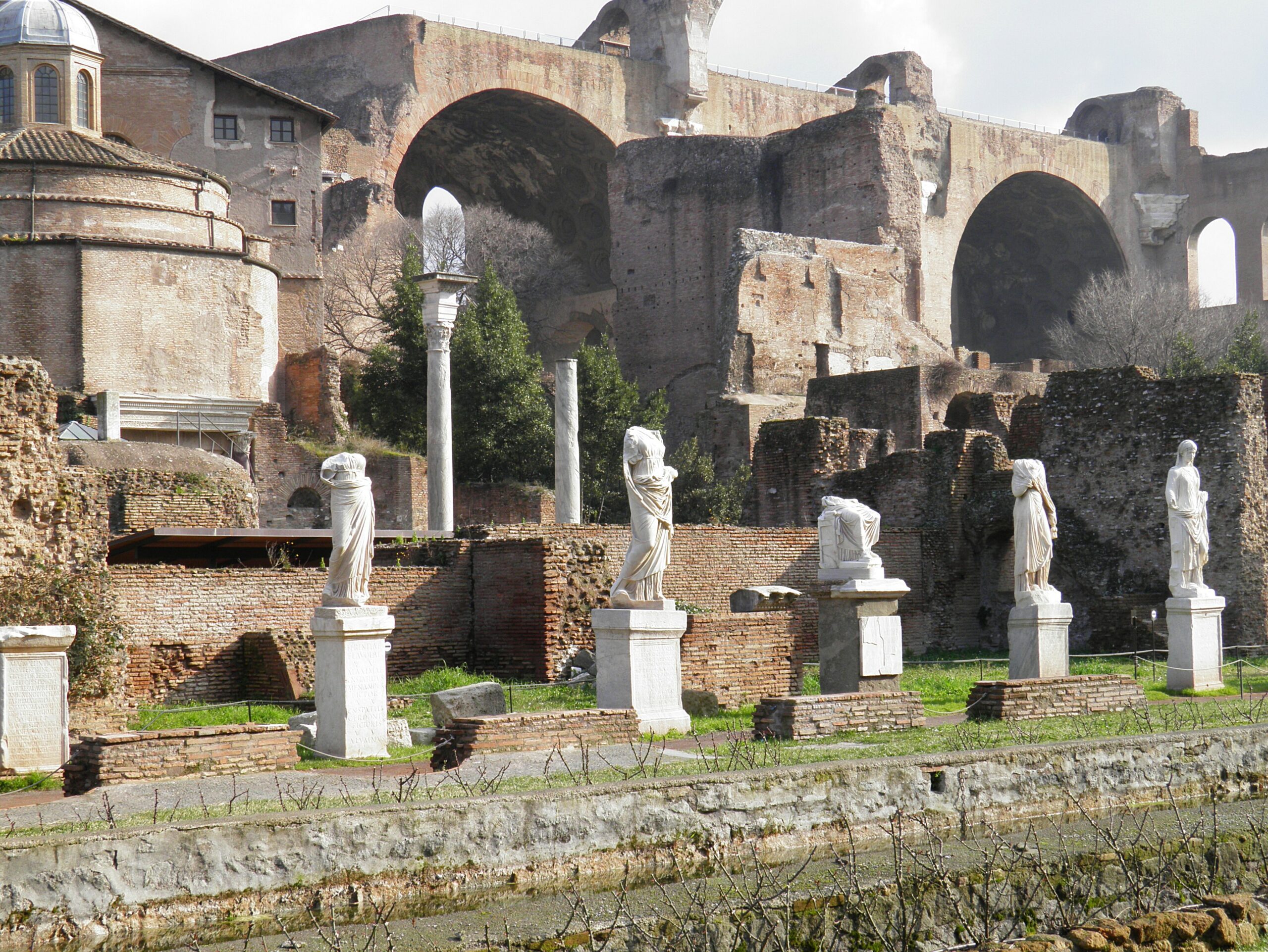
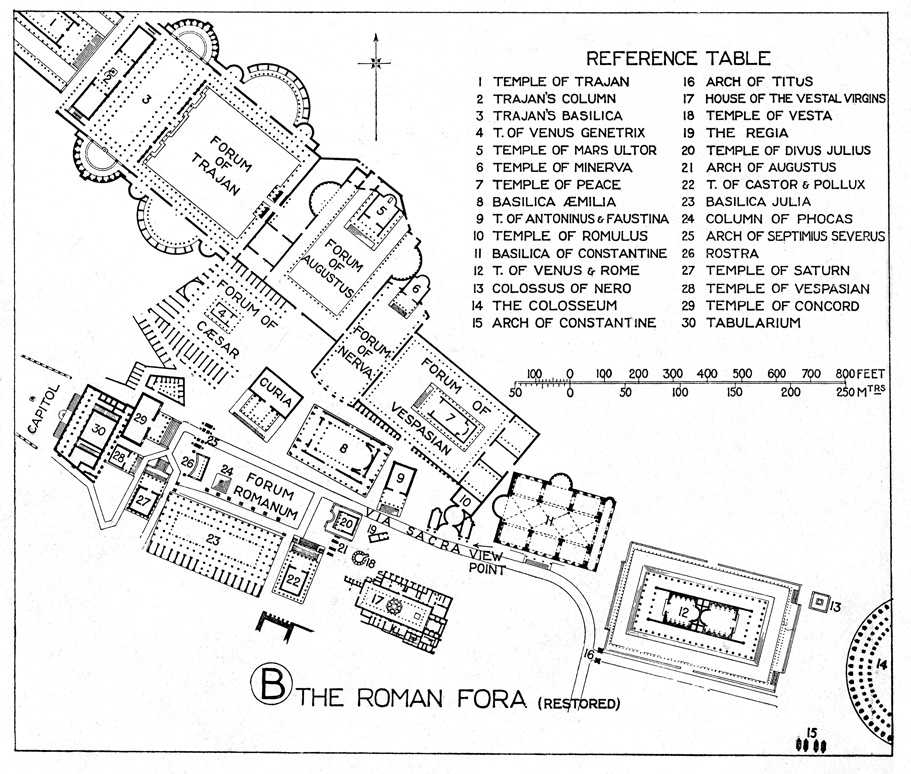
Additional features included service rooms, kitchens, offices, and a lararium—a small shrine for household gods—suggesting a fully self-contained domestic and religious complex. The house connected directly to the Temple of Vesta, facilitating the Vestals’ ritual duties. The location was strategic—just off the Via Sacra, the main ceremonial street of ancient Rome—and near other significant structures such as the Domus Publica—the residence of the Pontifex Maximus—the Basilica Julia, and the Temple of Castor and Pollux.2
The House of the Vestals evolved through various time periods, with its earliest phases dating to the 6th century BCE. The Republican period saw the construction of a more defined residence, while the Imperial period introduced luxurious elements, including an expansive peristyle courtyard, as well as the addition of sophisticated hydraulic and drainage systems, evidence of increased wealth and imperial patronage.1,2
Artifacts Found
Excavations have uncovered a wealth of artifacts, including statues, inscriptions, and religious paraphernalia. Among the most significant finds are statues of Vestal Virgins, some with inscriptions that provide insight into their roles and identities.2 Additional discoveries include domestic items, such as fragments of frescoes, oil lamps, pottery shards, and luxury items such as jewelry and glassware, suggesting that the Vestals lived in relative opulence. Also found were charred plant remains, including wheat, barley, and legumes, as well as faunal remains.2 The plant remains indicate offerings and possibly food preparation associated with religious rituals. Faunal remains, particularly pig and chicken bones, further support the idea of sacrifice and feasting tied to religious observance. These artifacts not only inform us about the Vestals’ daily lives but also about their ritual responsibilities and the broader religious landscape of Rome.

Theories and Conclusions from Excavations
Archaeologists have interpreted the site as a dynamic space that mirrored the shifting religious, political, and architectural trends of Rome. The layering of materials and reconstruction efforts reveal a site that was continuously adapted for new needs.1 The transition from simple Republican rooms to elaborate Imperial architecture underscores the growing institutionalization of the Vestal cult and its integration into the Roman state apparatus.2
Some scholars suggest that the House also functioned as a public interface for elite Roman religion, reinforcing the Vestals’ visibility and authority in civic ceremonies.3 The presence of offerings, shrines, and inscriptions all point to the ceremonial significance of the complex. The careful planning and reconstruction of the House following fires and disasters highlight its symbolic importance to Roman identity.1
Scholarly Debates
There is ongoing scholarly debate over the social and familial roles of the Vestals. Some scholars, relying on ancient legal sources like Aulus Gellius, claim that Vestals were completely severed from their families upon appointment, functioning as unique legal entities under the guardianship of the Pontifex Maximus.4 Others argue that Vestals retained familial bonds and were often involved in supporting their natal families politically and socially.3 Evidence of intercession in political matters and correspondence with relatives supports the latter view. Another debate revolves around the nature of their virginity and its symbolic implications. While some interpret it strictly as a means of ritual purity, others see it as a form of political symbolism, marking the Vestals as unique bearers of Roman virtue and continuity.4
Ancient Literary Sources
Numerous ancient writers reference the Vestals and their sacred duties. Livy offers early descriptions of their selection and the consequences of breaking their vows.3 Plutarch discusses the rituals and ceremonies involving the Vestals, and Cicero alludes to their political influence, as in the case of the trial of Catiline, where a Vestal named Fabia was implicated but acquitted—an event heavily loaded with both legal and moral implications.4 These sources help contextualize the archaeological evidence and provide insight into how the Vestals were perceived in Roman thought.
Final Thoughts
The House of the Vestals was much more than a residence; it was a cornerstone of Roman religious life and a physical manifestation of state power and ritual continuity. Situated in a highly symbolic area of Rome and surrounded by political and religious landmarks, it served as both home and sanctuary for some of the most powerful women in Roman history. Ongoing excavation and scholarship continue to reveal the layers—both literal and metaphorical—of meaning embedded in this extraordinary site.
Sources
-
- Jones, Rick, and Damian Robinson. “Water, Wealth, and Social Status at Pompeii: The House of the Vestals in the First Century.” American Journal of Archaeology, vol. 109, no. 4, 1 Oct. 2005, pp. 695–710, https://doi.org/10.3764/aja.109.4.695.
- Scott, Russell T., Paul Henderson, Charlotte Steffensen, Christina Trier, Lorenzo Costantini, John Giorgi, and A. J. Ammerman. “Excavations in the Area Sacra of Vesta (1987–1996).” Memoirs of the American Academy in Rome. Supplementary Volumes 8 (2009): i–167. http://www.jstor.org/stable/25759485.
- Gallia, Andrew B. “Vestal Virgins and Their Families.” Classical Antiquity 34, no. 1 (2015): 74–120. https://doi.org/10.1525/ca.2015.34.1.74.
- Cadoux, T. J. “Catiline and the Vestal Virgins.” Historia: Zeitschrift Für Alte Geschichte 54, no. 2 (2005): 162–79. http://www.jstor.org/stable/4436764.