
Chapters
2 Information about Connecticut College
Connecticut College Land Acknowledgement
We acknowledge the land we currently occupy and honor the Native peoples who were its first inhabitants. Specifically, we honor the Mashantucket Pequots, Eastern Pequots, Mohegans, and other Native nations who are indigenous to Nameaug, now called New London, and the land surrounding Coastal Algonquin, also known as the “Long Island Sound Region.” We acknowledge that indigenous peoples have cared for this land over many generations and know that they endured suffering and violence through the historical period of settler colonialism and its legacy. Today, we strive to tell and retell the complete stories, to repair the harm, and to live together as neighbors in this region.
History of Connecticut College
The College was founded in 1911, but its history began in 1909 when Wesleyan University announced that it would no longer offer admission to women. At that time, more women than ever were seeking higher education and demanding the right to vote. A committee was formed, and towns across the state of Connecticut began offering prospective sites.
A New London hilltop, later described as “the finest college site in the world,” was the committee’s first choice, and they asked New London to raise $100,000 to ensure that their proposal would succeed. A 10-day fundraising campaign exceeded the goal by $35,000. Nearly a third of the inhabitants of the city and the surrounding communities contributed, including many children, along with virtually every business and organization.

Official opening of Connecticut College, Oct. 9, 1915
A board of incorporators petitioned the State of Connecticut for a charter, which was granted in April 1911. The incorporators became the board of trustees, whose first responsibilities were to appoint a president and a campus architect. As it prepared to make these decisions, the board learned with some astonishment that its chairman, Morton Plant, was giving $1 million for an endowment. The future of the College—Connecticut College for Women—was assured. From then until 1969, when it shortened its name to Connecticut College and became a coeducational institution, it earned a strong reputation for itself as a premier women’s college. As early as 1924, when it first became accredited by the top accrediting group, the Association of American Colleges, it was admitted to the association’s list of two hundred leading colleges out of 1,300 in the nation.
Today, Connecticut College is a thriving private, coeducational liberal arts college known for the extraordinary students who are attracted here by rigorous academics and a comprehensive residential life program, as well as the diverse opportunities to explore their interests through funded internships, community service or international study. More information on our history and traditions can be found here.
Our Campus

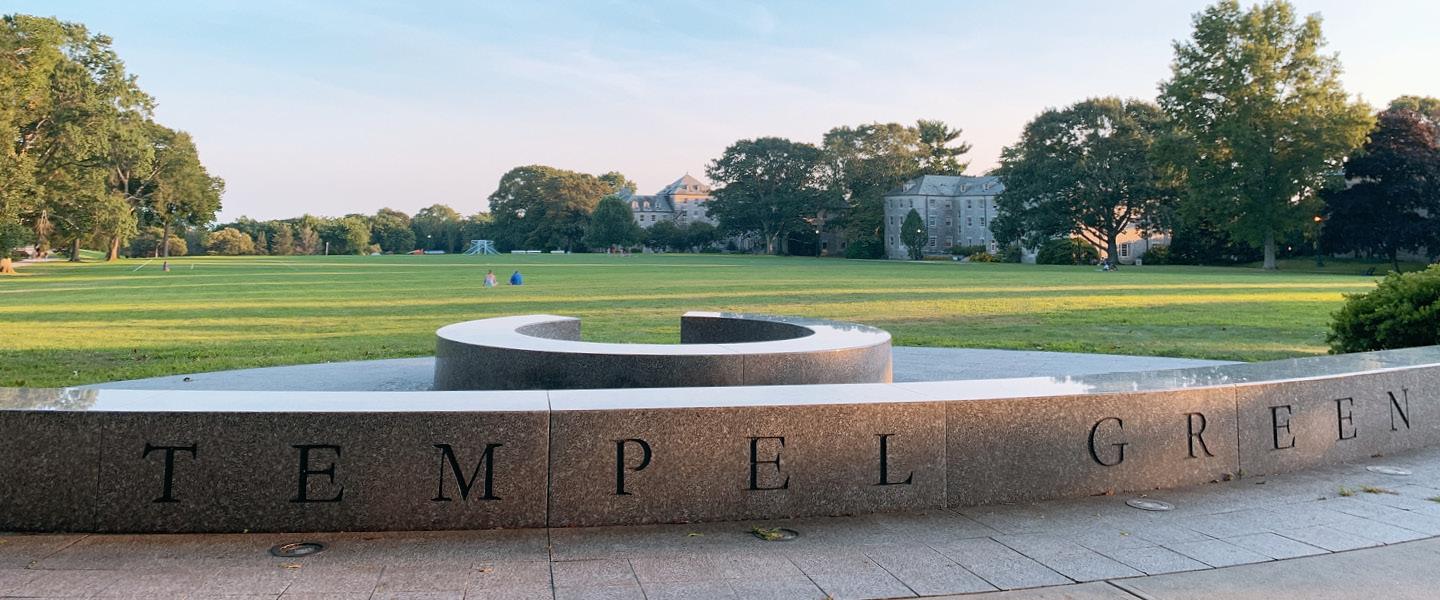
The Connecticut College campus spans 750 acres overlooking the Long Island Sound and Thames River. At the center of campus are Temple Green, Shain Library, Crozier Williams Student Center, and Blaustein, with many academic and administrative buildings, dorms and outdoor spaces around the perimeter. Recent revitalization projects include The Athey Center for Performance and Research at Palmer Auditorium and the Kohn Waterfront. A new downtown New London student residence, Manwaring Apartments, opened in Fall 2022.
Academic Buildings
The College’s Academic Buildings are each as varied and unique as the departments they house. If you would like information on building locations across campus please see the most recent Campus Map. Information about activities and occupants for Academic Buildings on campus can be found here.

Arboretum
The Connecticut College campus exists in a singular environment known as the Connecticut College Arboretum, which offers a quality of life and a conservation classroom unique among liberal arts institutions. The Arboretum provides a welcome connection with the natural world, offering opportunities for teaching, research, conservation, public education and recreation. The Arboretum’s diverse 750 acres include the landscaped grounds of the College campus, the Native Plant Collection (across Williams Street), the Caroline Black Garden (across Route 32) as well as the surrounding natural areas and managed landscapes. These resources all support the College’s mission of preparing the next generation of citizen-leaders, whose diverse responsibilities will include crafting a sustainable relationship with the natural world. Our institution distinguishes itself by a long-standing commitment to conservation and supporting research and teaching in ecological and environmental studies. All of the College property is available for teaching and research in environmental studies, the biological sciences and other academic programs. The Arboretum is open to the public every day from sunrise to sunset. Interactive maps, extensive research documentation, publications, and public programs are available at the Arboretum office, which is currently located on the first floor of the Olin Science Center and at arboretum.conncoll.edu. Please contact the Arboretum office at arbor@conncoll.edu to schedule a visit or learn more.
