
Chapters
Motivation
Gabby Cumming, Tess Barker, Sabrina Moore, Gwyneth Perez Perez, and Nolan Rose
Introduction
Motivation in sports is an important topic that we have decided to explore by delving into the intricate dynamics that drive athletes throughout their careers, relationships, and their overall lives. Our aim is to understand the multifaceted nature of motivation, as it lays the foundation for lifelong engagement in not only physical activity, but in all areas of one’s life span. Our mission is to explore the various factors, such as biological, social, and intrinsic to name a few, that contribute to shaping motivation across all stages of life. There is great relevance in learning more about motivation, especially due to the increasing awareness of mental health challenges in sports, as there is a great need for promoting supportive environments that foster joy, resilience, and love for the game. We will be examining elements such as intrinsic and extrinsic motivation, the role of team dynamics, and how injuries can impact an athlete’s drive, in order to uncover insights that can enhance motivation strategies in sports, ultimately promoting healthier, more fulfilling lives and athletic experiences.
Motivation Across the Lifespan
By: Tess Barker
As kids grow and mature, they are motivated towards different things, and different methods of motivation become effective. Motivation is always important, as it is what drives people to keep pursuing their goals. In sports especially, an athlete must be motivated by their sport or exercise regimen to maintain adherence. Let’s explore motivation across the lifespan.
Childhood
Early in life, children are intrinsically motivated to explore and actively engage with tasks once their basic needs are met (National Scientific Council on the Developing Child, 2018). As mentioned in the Youth Sports chapter, intrinsic motivators are thought to be the most effective and lasting motivators in early childhood. However, including positive feedback can be beneficial in supporting intrinsic satisfaction and building healthy motivation systems. Childhood is when many people start pursuing sports for the first time, and including positive feedback and reinforcement in ways that harness natural curiosity is a great strategy for coaching young kids.
Figure 1
Soccer – Army Youth Sports and Fitness
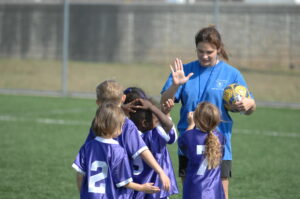
Note. From Soccer – Army Youth Sports and Fitness, by USAG- Humphreys, 2011, Flickr.
(https://www.flickr.com/photos/usaghumphreys/6205979382).
As previously established in the Youth Sports chapter, kids are strongly motivated towards things that prove proficiency (Daffin, 2021). Erikson’s theory of psychosocial development states that middle childhood is characterized by industry vs inferiority. This stage is when kids are looking to find mastery in their world (industry, rather than falling short and feeling inferior). Kids are also motivated by their self-concept and discovering what things they are good at and what they may not be so good at. In sports, this means kids start to find their competitive drive and uncover ways of achieving their proficiency goals that align with their sense of self. Their physical self-concept develops as they come to understand their athletic abilities.
Adolescence
In adolescence, motivation tends to be influenced by peers, exploration, and feedback on performance (NSCDC, 2018). Many adolescents are motivated by social pressures to be thin and thus evaluate their relationships with exercise, potentially starting new routines or sports (Daffin, 2021). In the extreme, this can lead to an unhealthy relationship with exercise and movement. In Erikson’s psychosocial development theory, adolescents are motivated towards identity, contending with identity vs role confusion. For many teens who are athletes, this is a time when being an athlete becomes integral to their identity. As the end of high school ends, adolescent athletes contend with the chance that this may be the end of their formal sports career. On the contrary, some athletes are skilled enough to pursue their sport further in college or professional leagues. Adolescents are also motivated by social affiliation (Daffin, 2021). For athletes who play multiple sports, teens may be more likely to stick with sports that provide them a desirable team atmosphere.
Figure 2
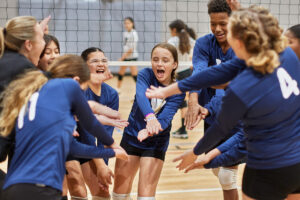
Note. From Sports Intro Col 1, by YMCA Fort Worth, 2023, YMCA.
(https://ymcafw.org/wp-content/uploads/2023/11/Sports-Intro-Col-1.jpg).

Adolescents tend to be more sensitive to social acceptance and rejection than adults do (NSCDC, 2018). Thus, teens generally respond well to positive feedback, reinforcing the value of their goals and that they are able to achieve them. When an adolescent is already strongly set on their goal, critical feedback can be effective at identifying gaps in desired ability and real ability. Coaching is most effective when tailored to the individual, based on how committed they are to the sport.
Adulthood
In adulthood, organized sports often become less accessible, so adults motivated to stay active often turn to individual exercise practices. Early adulthood brings into question the role that sports play in athletes’ identities (Daffin, 2021). Similar to what high school athletes experience, college student athletes graduating must face the potential end of their sports career. Some may have established their identity strongly around being an athlete and be motivated to find ways to continue participation in their sport. In late adulthood, motivation becomes very important, as people face the end of their lives. Without motivation, the end of their life may be unfulfilling to them. Older adults can be motivated by affirming their self-identities and enhancing feelings of usefulness (Ray & Rani, 2023). Although exercise is highly beneficial to wellbeing during this life stage, older adults tend to struggle with motivation and actual practice (O’Neil-Pirozzi et al., 2022). For older adults, setting specific, personal goals is an effective strategy to encourage initiation of an exercise routine. In order to encourage adherence to that routine, personalized monitoring and coaching is beneficial.
Figure 3
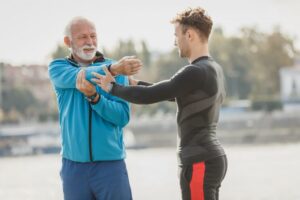
Note. From Senior Man Stretching With Trainer Outdoors, by Direct Media, Freerange Stock.
(https://freerangestock.com/photos/163227/senior-man-stretching-with-trainer-outdoors.html).
As people enter different stages of life, a variety of things become more and less important. Young children are often driven by mastery, and intrinsic motivation is key. This can be bolstered with positive feedback and reinforcement. For adolescents, peer interactions loom large. It’s important to foster socially accepting sports environments and to individualize coaching techniques. As adolescents become adults, identity is often at the forefront of one’s mental state. Finally, in late adulthood, it’s crucial that individuals find ways to stay motivated throughout the end of their lives, although it can be difficult. These are some of the developmental aspects of motivation, but that is not the only lens we can explore motivation through. Next are some of the biological aspects.
Chasing the High: Biological Mechanisms Behind Exercise Motivation
By: Sabrina Moore
Imagine you are running outside in the early afternoon. It is a nice day outside and you experience the warmth of the sun on your back. You feel your body establishing a sense of comfort from the rhythmic motion of your feet landing on the pavement only to feel your legs contract again. Your heart rate is elevated, but regular and you can feel its gentle but steady and persistent presence within yourself. You push yourself to go faster and faster—but why? What motivates you to run? You could be an athlete training to bring your best into the team, you could want to improve your own health and wellbeing, you could be training for a race or other reward, or, like many people, you could have a complex cocktail of intrinsic and extrinsic motivators that provide the encouragement that you need to accomplish your personal goals.

Image: (http://2.bp.blogspot.com/-gZFWKaH0Qa4/VGtVjlppDgI/AAAAAAAAPhs/nnBk7OhV9Ko/s1600/SADSunshine.jpg)

Motivation for exercise is a complex phenomenon that is influenced by a wide variety of factors. While social and psychological elements often provide substantial motivation, biological factors like neurochemistry also serve as motivators. Endorphins and other endogenous opioids also play a significant role. Endogenous opioids (including endorphins) are naturally occurring chemicals in the brain that play a crucial role in the brain’s reward system (O’Connor & Gramlich, 2023). These receptors are activated when a person takes an addictive drug like morphine. In fact, the term “endorphin” is derived from the term “endogenous morphine,” because endogenous opioids, while produced naturally, have similar effects to synthesized opiates like morphine and heroin and therefore they are a means of controlling pain and stress (O’Connor & Gramlich, 2023).
As the body engages in physical activity, especially in the form of aerobic exercise such as running, the body releases endorphins into the bloodstream, producing an analgesic effect which leads to pain relief and a feeling of euphoria or an improved state of well-being after prolonged exercise which is often referred to as a runner’s high. (Monika & Romate, 2024). As discussed within Monika & Romate, the ways that individuals experience runner’s highs varies drastically among individuals and can be influenced by a variety of factors such as their mental state, physical fitness, and genetic disposition. Additionally, while fairly common, runner’s highs are not universal and some individuals who engage in prolonged exercise will not experience one (2024).
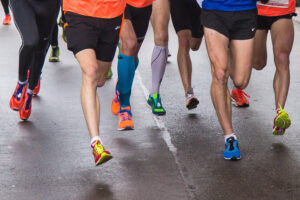
Image: (https://www.focusfitness.net/stock-photos/wp-content/uploads/edd/2017/06/190-runners-legs.jpg)

While endorphins are attributed to causing runner’s highs, in animal studies, a blockage of the opioid system did not appear to “affect the subjective experience during endurance exercise” (Farrell et. al, 1986). This finding appears to contradict endorphin research because it seems to show that runner’s highs were unaffected by not receiving any response from the opioid system. This could mean that endorphins possibly play a more backseat role in neurochemically motivating people to exercise. Hypothesizing alternative causes for runners’ highs and potentially addressing their lack of universality, Siebers & Biedermann investigated the effects that endogenous cannabinoids have on exercise motivation (2022). Endogenous cannabinoids (eCBs) are lipophilic molecules which allow them to penetrate the blood-brain barrier easily and efficiently, making them an excellent potential candidate to help explain a runner’s highs (Siebers & Biedermann, 2022). Although current evidence suggests that eCBs influence runner’s highs and exercise induced euphoria, future research is necessary to reveal their true involvement.
No matter what the direct neurochemical culprit is, prolonged exercise can trigger an improved sense of wellbeing and feelings of euphoria. The pleasurable feelings of this type of exercise motivates many to continue exercising and to make consistent exercise a part of their routine.
Intrinsic Motivation and Finding Your Drive Within
By: Gabby Cumming
Sources of motivation come from all sorts of different areas, and no matter the source, it is the driving force behind one’s behaviors that reflects the reason for their actions. Though, the question resides: what force is stronger, internal or external? In a world driven by money and social status, the sense of self can easily get lost in external pressures, such as peer pressure, validation from others, and financial worries, to name a few—yet, a glimpse to the answer of whether we should focus on internal or external drive resurfaces when one begins to ask why they approach their work, and life, the way they do. While external rewards may offer short-term sparks, intrinsic motivation—the desire to act out of personal interest or inner satisfaction—is the most powerful and enduring force. Understanding this internal drive is key to finding lasting fulfillment in our goals and actions. It fuels perseverance, creativity, and genuine passion—elements that external rewards alone can rarely sustain.
Why Is Intrinsic Motivation Important?
Intrinsic motivation arises from within and naturally drives a person more than anything else. Extrinsic motivation, while important, cannot exist on its own in a healthy manner; it relies on external rewards and recognition, and proves to be an insufficient drive in the long term(Fishbach & Woolley, 2022). However, intrinsic motivation is embedded deep within you, representing an enduring source that pushes us through times of adversity. This force, once discovered, can keep you energized, composed, and disciplined. In a study done in 2022, researchers Ayelet Fishbach and Kaitlin Woolley explored how intrinsic motivation arises from a strong link between an activity and its end goal. They found that when this connection is unique, consistent, and felt in the moment, motivation becomes deeper and more sustainable. Unlike extrinsic rewards, which are often temporary and can fade, intrinsic motivation fuels long-term engagement, resilience, and joy.

Note: From Flickr, by Andy Wright, 2025
(https://www.flickr.com/photos/rightee/1257384934). CC BY 2.0
It is this internal alignment, not external pressure, that drives us to keep going—especially when things get hard (Fishbach & Woolley, 2022). When our actions are connected to meaningful goals that satisfy our self-needs, intrinsic motivation becomes a powerful, lasting force that sustains effort and shapes who we are, as it allows us to enjoy the journey and overall process to our end destination.
Why Does Extrinsic Motivation Fall Short?
While external rewards can provide temporary encouragement and joy, they often lack the power needed for true commitment and fulfillment. Extrinsic motivators, such as money, praise, or status, can make one feel great in the moment, but their impact tends to fade over time, especially when they fail to meet deeper psychological needs. In their study, “The Effect of Coaching Support Behavior on the Intrinsic Motivation of Athletes,” Tongling Wang (2022) found that athletes whose coaches focused too heavily on performance outcomes and external validation and results experienced a decline in intrinsic motivation. This decline was largely due to a lack of support for their basic psychological needs, which include autonomy, competence, and sense of belonging. These athletes were less likely to stay committed or feel a true connection to their sport due to the lack of fulfillment they experienced. Unlike extrinsic motivation, intrinsic motives are self-determined, and this is because they give one the internal push towards a pursuit for personal gain because it is coming from within. Reflecting on one’s autonomy, sense of belonging, and competence is key to unlocking this underlying drive.
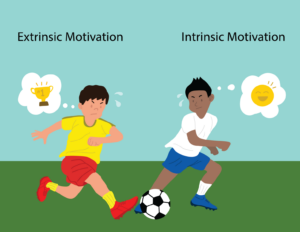
Note: From Wikimedia Commons, by Muhammad M. Rahman, 2018 (https://commons.wikimedia.org/wiki/File:Muhammad_Intrinsic_vs_Extrinsic_Motivation.png). CC BY 2.0

Wang’s study further revealed that people thrive when their environment supports their internal motivations—not when it pressures them with external demands. Motivation rooted in personal growth, curiosity, and self-improvement is far more resilient than that fueled solely by trophies, grades, or social comparison. When our actions are motivated only by external rewards, the activity can lose its meaning, making it harder to sustain effort or find joy in the process (Wang, 2022).
How To Find Your Drive
We live in a world where the temptation to give into external validation is advertised everywhere. Taking a step back to reflect on what is truly important to you allows one to cultivate intrinsic motivation; it is a matter of reconnecting with what matters to you—your values, interests, and purpose. In their review, “On What Motivates Us,” Morris, Grehl, Rutter, Mehta, and Westwater (2022) explain that intrinsic motivation flourishes in environments that nurture autonomy, mastery, and meaningful connection. Their research emphasizes the importance of supporting self-directed goals, creating space for internal satisfaction, and avoiding overuse of external reinforcers that can dilute internal purpose. Whether it is choosing to learn something because you are curious, pursuing goals aligned with your personal values, or reframing challenges as opportunities to grow, the key is to shift your focus inward—toward what fulfills you, not just what impresses others (Morris et al., 2022). Intrinsic motivation is not about removing all external rewards, it is learning how to cultivate a healthy balance that prevents you from feeling the need to depend on them. When you tap into your own drive, the work not only becomes more than a task, it becomes a reflection of who you are. And that is the kind of motivation that lasts.
Team Dynamics & Motivation in Athletes
By: Gwyneth Perez-Perez
Athletes motivation is deeply influenced by their social environment, particularly in how athletes train and compete. Recent studies highlight the importance of coaching styles, team cohesion, and social support from various sources in athletes psychological resilience and engagement. In the study, Empowering Young Athletes: The Influence of Autonomy-supportive Coaching on Resilience, Optimism, and Development, by Zhang Na (2025), found that autonomy-supportive coaching–where athletes are given a sense of control and encouraged to make decisions–boosts resilience and optimism. These qualities enhance both athlete development and intrinsic motivation. This demonstrates how empowering coaching can positively impact both personal growth as well as performance.
Similarly, influence of team cohesion also plays a crucial role in maintaining high levels of athlete engagement in which examined with collegiate basketball players, Wang Liang (2024), affirm that when athletes feel a strong sense of belonging and unity with their teammates, they are more than likely to be committed. However, the dynamic is affected by coaching leadership styles. The study discovered that moral leadership, which emphasizes fairness, ethics, and respect, strengthens the positive impact of team cohesion. In contrast, authoritarian leadership relies on control and strict discipline can undermine the benefits and reduce participation.

Image: (https://stockcake.com/i/team-unity-huddle_874597_773173)
On the broader side of the team setting, support from peers, parents, and coaches serves as a key source of athlete motivation. In a doctoral dissertation, Roby (2022), analyzed NCAA Division III athletes and found that only support from coaches had a significant impact. While parental and peer support contribute more to emotional well-being, it is the coaches feedback and guidance that directly fuel an athletes drive to succeed in competitive environments.
Together, these studies collectively emphasize the powerful influence coaches hold—not only as technical guides but as key motivators and mentors. When coaches offer emotional, informational, and esteem support, athletes are more than likely to feel confident, self-driven, and valued. With a strong team dynamic and the right kind of social support, athletes are better equipped to navigate challenges, maintain motivation, and continue developing both on and off the field.

Image: (https://www.pexels.com/photo/a-coach-talking-to-his-team-6077804/)
Ultimately, athletes motivation is shaped by more than just individual effort—it is rooted in a deep understanding of, and the ability to leverage, relationships within their sporting environment. Coaches who lead with empathy and integrity, foster team cohesion, and provide consistent support can significantly enhance an athlete’s commitment and development. By understanding and applying these principles, educators, coaches, and sports administrators can build more effective, motivating teams, while also fostering resilience and optimism in individuals.
You and Your Teammates: A Motivator for Recovery and Mental Illness
By: Nolan Rose
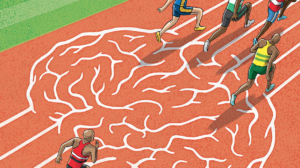
Facing an injury is mentally daunting. Maintaining your mental health can be even more challenging. In an ideal world those who suffer from mental illness receive plenty of support and help to re-acclimate to their chosen sport. Unfortunately, help is not always offered—some athletes even face social rejection (Gulliver et al., 2015). This issue is exasperated as historically mental health has been stigmatized in sports. Going so far as many feeling the need to hide their diagnoses or issues to avoid becoming social outcasts.
This is unfortunate, as a study assessing mental health in sports found support from teammates could be a key factor in their sports career (Petersen et al., 2024). The researchers found that social support alleviated many mental health symptoms, citing it as a pseudo-protective factor for athletes’ overall well-being. They also emphasized the benefits of help-seeking behavior, with many athletes reporting reduced anxiety, leading to improved performance on the field and enriched social lives because of the supporting environment.
These positive outcomes could extend beyond mental health alone. Another study found a correlation between post-concussion symptoms and reported depression (Riegler et al., 2023). The authors concluded that this was likely due to a negative affective bias associated with depression, which could contribute to the perception of post-concussion-like symptoms. An earlier study found similar results among individuals experiencing anxiety. In contrast, athletes who were not dealing with depression or anxiety were less likely to experience such symptoms. Given that depression and anxiety are two of the most common symptoms of mental illness, team support could play a critical role in mitigating these effects and promoting overall health during recovery.

Image:https://acoachcalledlife.com/dpdr-fear-of-going-crazy/
In addition, psychological stress could be a major factor in both injury recovery and prevention (Wahl et al., 2020). This study identified psychological stress as a possible leading contributor to chronic stress and noted that it had the most direct negative effect on recovery. Chronic stress alone was seen as a major driver of burnout and increased injury risk in sports contexts.
So, why should any of this matter? Those recovering from injury or mental illness might not always outwardly express appreciation, but a teammate’s willingness to go the extra mile—to offer support, listen, or simply be present—can make a huge difference. According to the research cited, this kind of support may even contribute to an athlete’s physical recovery. It may sound cliché to repeat the phrase “be kind to one another,” but in the world of sports, kindness and empathy could be crucial to someone’s recovery journey. Be kind to those who are struggling, and try to lend a hand—or an ear. It goes a long way.
Conclusion
Collectively, we must work together to recognize the complex interplay of biological factors, intrinsic and extrinsic drives, and the influence of social support and team dynamics when considering motivation in sports, as understanding such concepts is key to fostering a supportive environment that nurtures athletes’ needs and motivation. Moving forward, we can utilize this information to develop targeted strategies that enhance motivation across different age groups and sports contexts. By applying these insights, we can contribute to healthier athletic cultures and empower athletes to thrive both on and off the field. We look forward to the next group’s discussion on performance anxiety, which will further enrich our understanding of the psychological aspects of sports.
Quiz
To those who wish to further engage with the material from this chapter, we have developed a short quiz to test your knowledge and absorb the insight provided on motivation!
1. True or false: Everyone who engages in prolonged aerobic exercise experiences a runner’s high.
2. Which alternative group of chemicals is being investigated for its role in runner’s highs, especially given some contradictory findings about endorphins
-
- A. Serotonins
- B. Dopamines
- C. Endogenous cannabinoids
- D. Corticosteroids
3. True or False: Adolescents are generally more responsive to critical feedback than younger children because they are more committed to long-term goals.
4. According to Erikson’s theory, which psychosocial stage characterizes middle childhood and influences kids’ motivation in sports?
-
- A. Identity vs Role Confusion
- B. Autonomy vs Shame and Doubt
- C. Industry vs Inferiority
- D. Integrity vs Despair
5. True or False: Intrinsic motivation is crucial for helping people to stay composed and disciplined during difficult times.
6. What is a negative effect of overemphasis on extrinsic rewards (e.g., trophies or status) have on motivation?
-
- A. Increase performance
- B. Undermine the meaning of the activity
- C. Strengthen long-term engagement
- D. Boost creativity
7. True or False: Team cohesion always leads to high athlete commitment, regardless of coaching style.
8. Which source of support had a clear direct impact on NCAA Division III athletes’ motivation?
-
- A. Peer support
- B. Parental support
- C. Team unity
- D. Coach support
9. True or False: Support from teammates has been found to reduce symptoms of mental illness and improve performance, according to Petersen et al. (2024).
- What is a major reason athletes may attempt to hide their mental health issues?
-
- A. Fear of social rejection and stigma
- B. Fear of disqualification
- C. Lack of medical support
- D. Financial consequences
Answer Key
- False
- C
- False
- C
- True
- B
- False
- D
- True
- A
References
Daffin Jr., L. W. (2021). *Motivation* (2nd ed.) Module 10: Motivation Across the Lifespan. Washington State University. https://opentext.wsu.edu/motivation-daffin/front-matter/introduction/
Farrell, P. A., Gustafson, A. B., Garthwaite, T. L., Kalkhoff, R. K., Cowley, A. W., Jr., & Morgan, W. P. (1986). Influence of endogenous opioids on the response of selected hormones to exercise in humans. https://journals.physiology.org/doi/abs/10.1152/jappl.1986.61.3.1051
File:Muhammad Intrinsic vs Extrinsic Motivation.png – Wikimedia Commons. (2018, October 28). Wikimedia.org. https://commons.wikimedia.org/wiki/File:Muhammad_Intrinsic_vs_Extrinsic_Motivation.png
Fishbach, A., & Woolley, K. (2021). The structure of intrinsic motivation. *Annual Review of Organizational Psychology and Organizational Behavior, 9*(1), 339–363. https://doi.org/10.1146/annurev-orgpsych-012420-091122
Gulliver, A., Griffiths, K. M., Mackinnon, A., Batterham, P. J., & Stanimirovic, R. (2015). The mental health of Australian elite athletes. *Journal of Science and Medicine in Sport, 18*(3), 255–261. https://doi.org/10.1016/j.jsams.2014.04.006
Image: A coach talking to his team. https://www.pexels.com/photo/a-coach-talking-to-his-team-6077804/
Image: Girl sitting in team changing room. https://www.pexels.com/photo/girl-sitting-in-team-changing-room-6764339/
Keep Going. (2025, April 21). Flickr; Keep Going | Andy Wright | Flickr. https://www.flickr.com/photos/rightee/1257384934
Monika, U., & Romate, J. (2024). The lesser-known phenomenon of sports: A systematic review of runners’ high. https://www.napsindia.org/wp-content/uploads/2024/10/The-Lesser-Known-Phenomenon-of-Sports-A-Systematic-Review-of-Runners.pdf
Morris, L. S., Grehl, M. M., Rutter, S. B., Mehta, M., & Westwater, M. L. (2022). On what motivates us: A detailed review of intrinsic v. extrinsic motivation. *Psychological Medicine, 52*(10), 1–16.
National Scientific Council on the Developing Child. (2018). *Understanding motivation: Building the brain architecture that supports learning, health, and community participation*. Center on the Developing Child at Harvard University. https://developingchild.harvard.edu/resources/working-paper/understanding-motivation-building-the-brain-architecture-that-supports-learning-health-and-community-participation
O’Connor, A., & Gramlich, C. A. (2023). Endorphins in the brain’s reinforcement system. https://www.ebsco.com/research-starters/psychology/endorphins-brains-reinforcement-system
O’Neil-Pirozzi, T. M., Cattaneo, G., Solana-Sánchez, J., Gomes-Osman, J., & Pascual-Leone, A. (2022). The importance of motivation to older adult physical and cognitive exercise program development, initiation, and adherence. *Frontiers in Aging, 3.* https://www.frontiersin.org/journals/aging/articles/10.3389/fragi.2022.773944
Petersen, B., Schinke, R. J., Coholic, D., Larivière, M., & Giffin, C. E. (2024). The social effects of mental ill-health stigma in sport. *Sport, Exercise, and Performance Psychology, 13*(3), 223–239. https://doi.org/10.1037/spy0000351
Ray, S., & Rani, P. (2023). Why elderly people need motivation? *Medicon Medical Sciences, 5*(2). https://themedicon.com/pdf/medicalsciences/MCMS-05-150.pdf
Riegler, K. E., Guty, E. T., Thomas, G. A., Bradson, M. L., & Arnett, P. A. (2023). How do you feel? Understanding “postconcussion-like symptom” changes over the course of a baseline neuropsychological evaluation. *Translational Issues in Psychological Science, 9*(1), 65–78. https://doi.org/10.1037/tps0000348
Roby, S. D. (2022). The effects of social support on the sport motivation of NCAA Division III athletes through the lens of self-determination theory: A correlational study (Doctoral dissertation, Liberty University). Liberty University Digital Commons. https://digitalcommons.liberty.edu/cgi/viewcontent.cgi?article=5240&context=doctoral
Siebers, M., & Biedermann, S. (2022). Do endocannabinoids cause the runner’s high? Evidence and open questions. https://journals.sagepub.com/doi/full/10.1177/10738584211069981
Wahl, C. A., Gnacinski, S. L., Nai, M. M., & Meyer, B. B. (2020). Psychological predictors of perceived stress and recovery in sport. *Sport, Exercise, and Performance Psychology, 9*(3), 292–307. https://doi.org/10.1037/spy0000175
Wang, L., Xu, J., & Liu, Y. (2024). The impact of team cohesion on athlete engagement in collegiate basketball leagues: The moderating role of paternalistic leadership. *Frontiers in Psychology, 15*, 1473506. https://www.frontiersin.org/journals/psychology/articles/10.3389/fpsyg.2024.1473506/full
Wang, T. (2022). The effect of coaching support behavior on the intrinsic motivation of athletes: The mediating role of psychological needs. *Revista de Psicología Del Deporte, 31*(2), 29–36. https://dialnet.unirioja.es/servlet/dcart?info=link&codigo=8653921&orden=0
Zhang, N., Du, G., & Tao, T. (2025). Empowering young athletes: The influence of autonomy-supportive coaching on resilience, optimism, and development. *Frontiers in Psychology, 15*, 1433171. https://www.frontiersin.org/journals/psychology/articles/10.3389/fpsyg.2024.1433171/full